
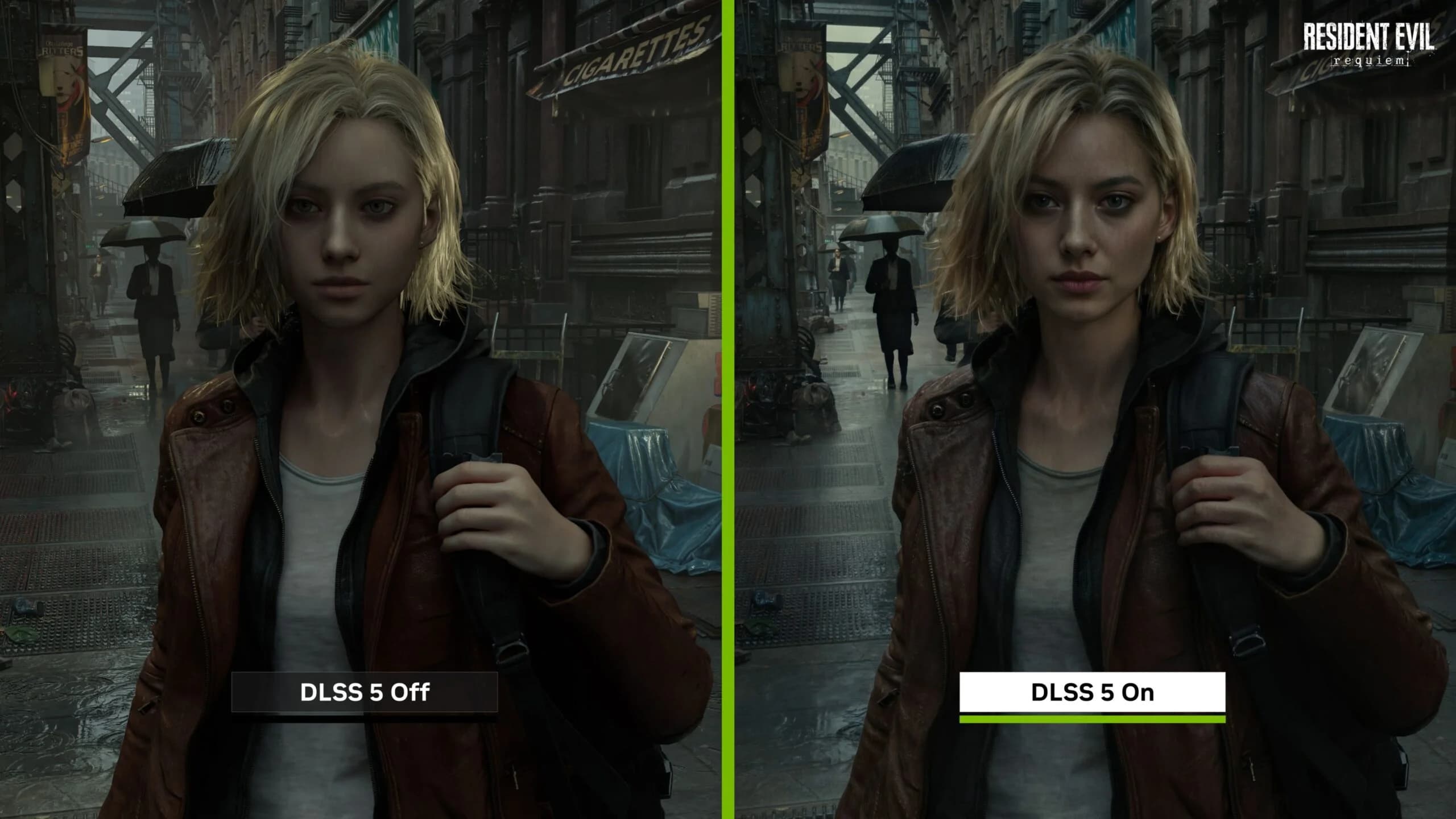
NVIDIA just dropped DLSS 5 at GTC 2026 and the internet is on fire.
Jensen Huang called it the “GPT moment for graphics.” The new tech uses neural rendering and generative AI to add photorealistic lighting, materials, and details in real time. It promises smoother frames, sharper visuals, and games that look closer to real life than ever.
But a huge chunk of the gaming community is pushing back hard. Many players are calling the demos “AI slop” because characters end up with overly perfect faces, uncanny valley vibes, and changes that feel like they erase the original artistic intent.
Here’s the full breakdown of what DLSS 5 actually is, why the backlash is so loud, and what it could mean for your next gaming rig.
What Is NVIDIA DLSS 5?
DLSS 5 is the next big step beyond DLSS 4.5. Instead of just upscaling and generating frames, it uses advanced neural rendering to fill in details that the game engine never actually rendered.
NVIDIA showed it off with games like Resident Evil Requiem, Starfield, and FC 26. The tech takes existing geometry and textures, then lets AI add photorealistic lighting, skin details, and environmental effects on the fly.
It’s coming to games this fall 2026, and NVIDIA says it’s a massive leap in real-time graphics.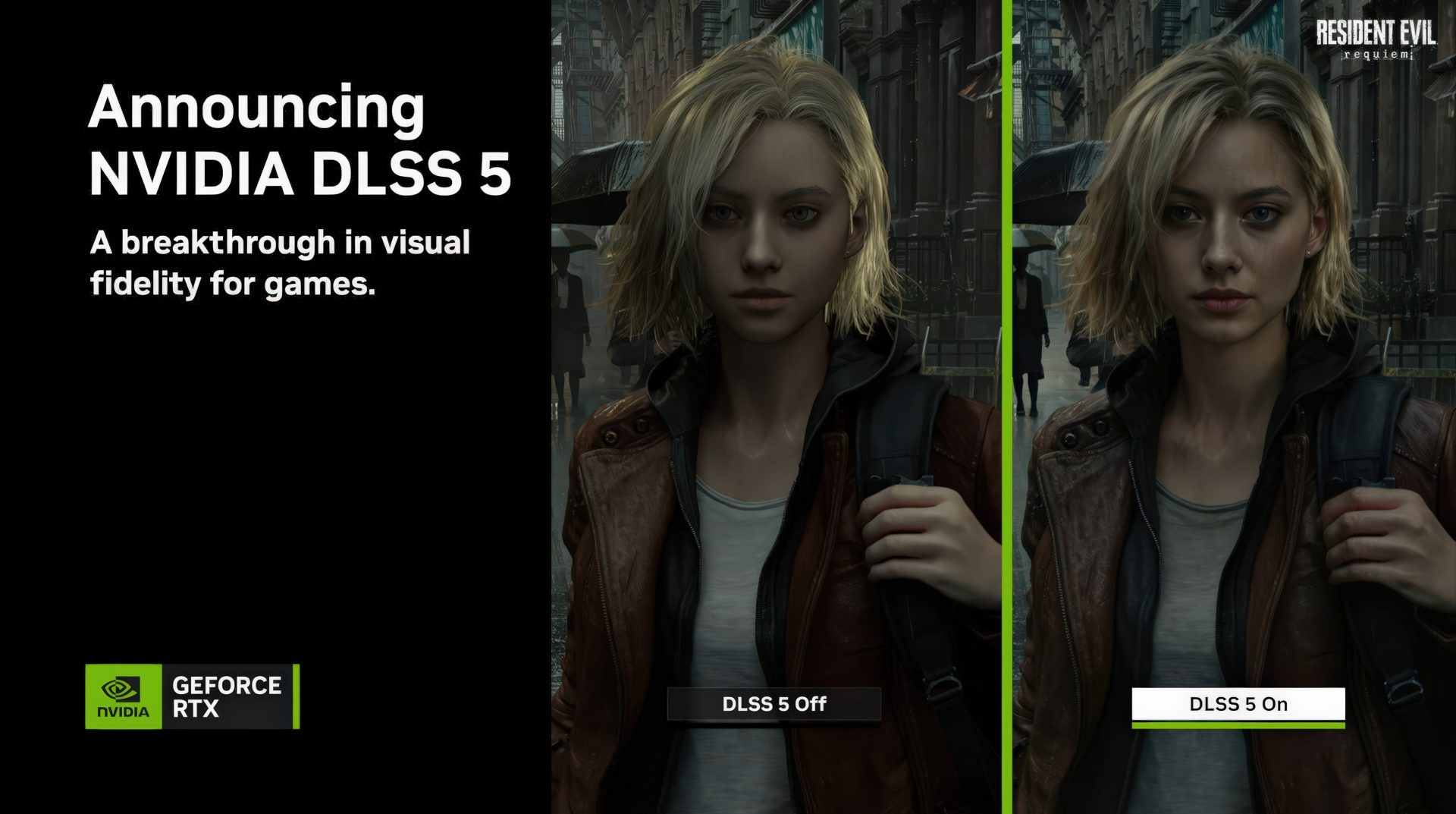 Image credit: Wccftech
This before-and-after comparison from the Resident Evil Requiem demo is what started most of the drama. On the left (DLSS 5 off) you see the original character design. On the right (DLSS 5 on) the face looks smoother, more “glam,” and somehow less like the gritty, stressed-out survivor she’s supposed to be.
Why Gamers Are Calling It AI Slop
The backlash hit fast and loud. Right after the keynote trailer dropped, the official reveal video sat at just 16% positive likes on YouTube. Gamers pointed out that characters started looking too similar, too polished, and too generic.
Artists and developers jumped in too. Some Capcom and Ubisoft teams reportedly saw the demos for the first time alongside everyone else and were shocked. One animator broke down how DLSS 5 was “painting over” the real geometry frame by frame, changing eye direction, lip details, and even ear shapes.
It’s not just about looks. Many worry it dilutes the hard work of game artists. When a character’s face gets an unintended beauty-filter treatment during a dark, emotional scene, it can break immersion and storytelling.
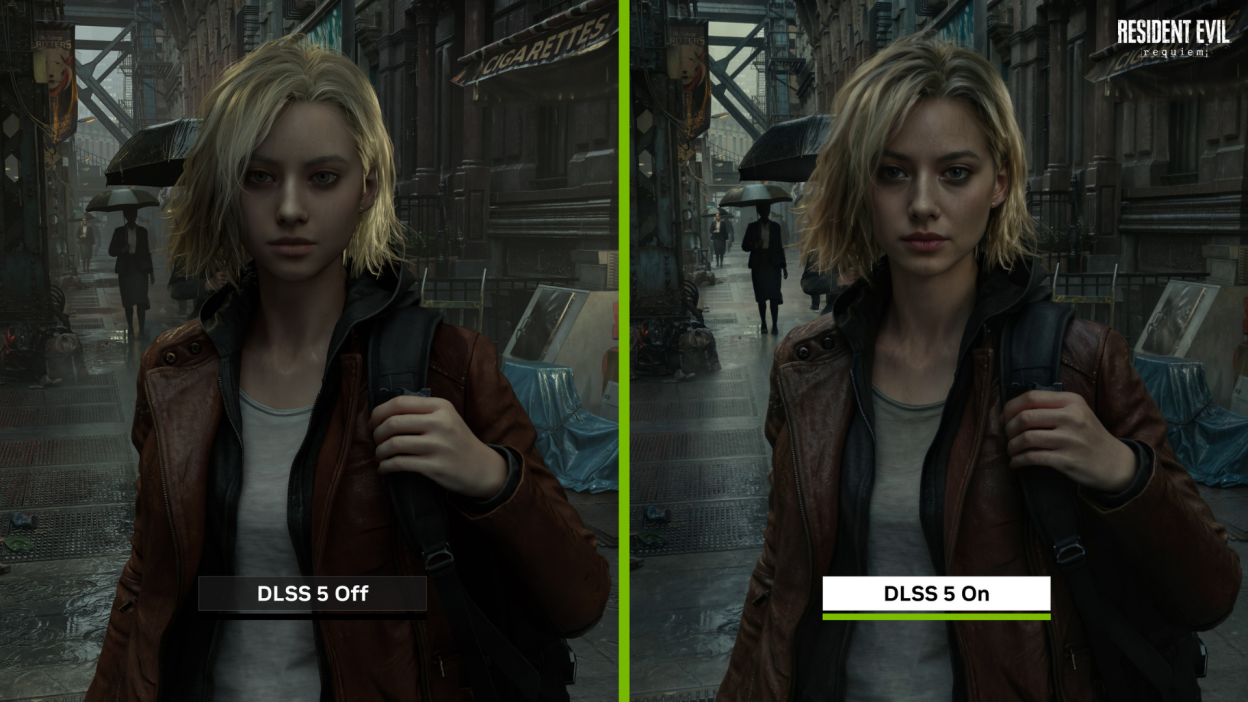
Image credit: Mashable
The memes exploded. People started posting “DLSS 5 On vs Off” edits comparing normal game art to over-smoothed AI-generated faces. The term “AI slop” spread like wildfire because the changes felt exactly like the generic, overly perfect AI art you see everywhere online.
Jensen Huang’s Response to the Backlash
NVIDIA’s CEO first pushed back hard. In a Q&A at GTC he said gamers criticizing DLSS 5 were “completely wrong.” He stressed that developers keep full artistic control and can fine-tune how the AI behaves.
A few days later, in a podcast with Lex Fridman, Huang softened his tone. He admitted, “I think their perspective makes sense and I can see where they’re coming from, because I don’t love AI slop myself.” He added that he understands why AI-generated content often looks too similar and too beautiful, but insisted DLSS 5 is different because it builds on the game’s original art.

Image credit: Tom’s Guide
Jensen Huang at GTC 2026 during the DLSS 5 reveal.
What DLSS 5 Could Mean for PC Gamers
Even with fancy new graphics tech, one thing never changes: when your game starts stuttering, lagging, or crashing, you just want to know if it’s happening to everyone else.
That’s why we built Outage.gg. While NVIDIA pushes AI to make games prettier, we keep it simple and real-time so you can check live reports for any game, see what other players are experiencing, and get Discord alerts for your squad.
Whether it’s a server hiccup, a driver issue after a new DLSS update, or something else entirely, you’ll know instantly instead of wasting time troubleshooting.
The Bigger Picture
DLSS 5 is still months away from full release, and NVIDIA says the model is still being optimized. The early demos clearly struck a nerve, but the final version in actual games could look very different once developers tune it.
For now, the controversy shows how protective gamers are of the art and soul of their favorite titles. Technology can make games look incredible, but it shouldn’t overwrite the vision that made them special in the first place.
What do you think? Would you turn DLSS 5 on in your favorite games, or are you sticking with the original art style?